- Creative Discipline
- Posts
- 136: How McDonald's Turned a Hamburger Stand Into a $200B System (Part 2)
136: How McDonald's Turned a Hamburger Stand Into a $200B System (Part 2)
A Creative History on McDonalds - Part Two

Chase Mohseni
March 12, 2026

A milkshake salesman, a handshake deal, and the most valuable "no" in franchise history.
Hey everyone, Chase here from CreativeOS.
Last week I told you how the McDonald brothers invented fast food in a San Bernardino parking lot.
A 9-item menu. A 30-second kitchen. A building shaped like a spaceship.
By 1954, they had lines around the block. They'd licensed the concept to a few franchisees. And they had absolutely no interest in building an empire.
That changed when a 52-year-old milkshake machine salesman named Ray Kroc drove into their parking lot.
This is the story of how he turned a hamburger stand into the most standardized brand on earth — by refusing to change a single thing about it.
In this issue, you'll learn:
Why Kroc was obsessed with a hamburger restaurant's milkshake machines
The franchise philosophy that built an empire on consistency, not innovation
How "QSC" became a religion — and why McDonald's fired franchisees who broke it
The milkshake machines.
Ray Kroc sold Multimixers — commercial milkshake machines that could make five shakes at once.
By 1954, his sales were declining. Fewer restaurants needed that kind of capacity.
But one restaurant in California had ordered eight Multimixers. That meant they could make 40 milkshakes at the same time.
Kroc had to see it for himself.
He drove to San Bernardino and watched the lunch rush. Customers lining up. Orders flying out the window. The whole operation running like a machine.
"I was fascinated by the simplicity and effectiveness of the system," he later wrote. "Each step in producing the limited menu was stripped down to its essence."
The brothers gave him a tour. Showed him the kitchen layout. Explained the Speedee Service System.
Kroc didn't see a hamburger stand. He saw a franchise machine.
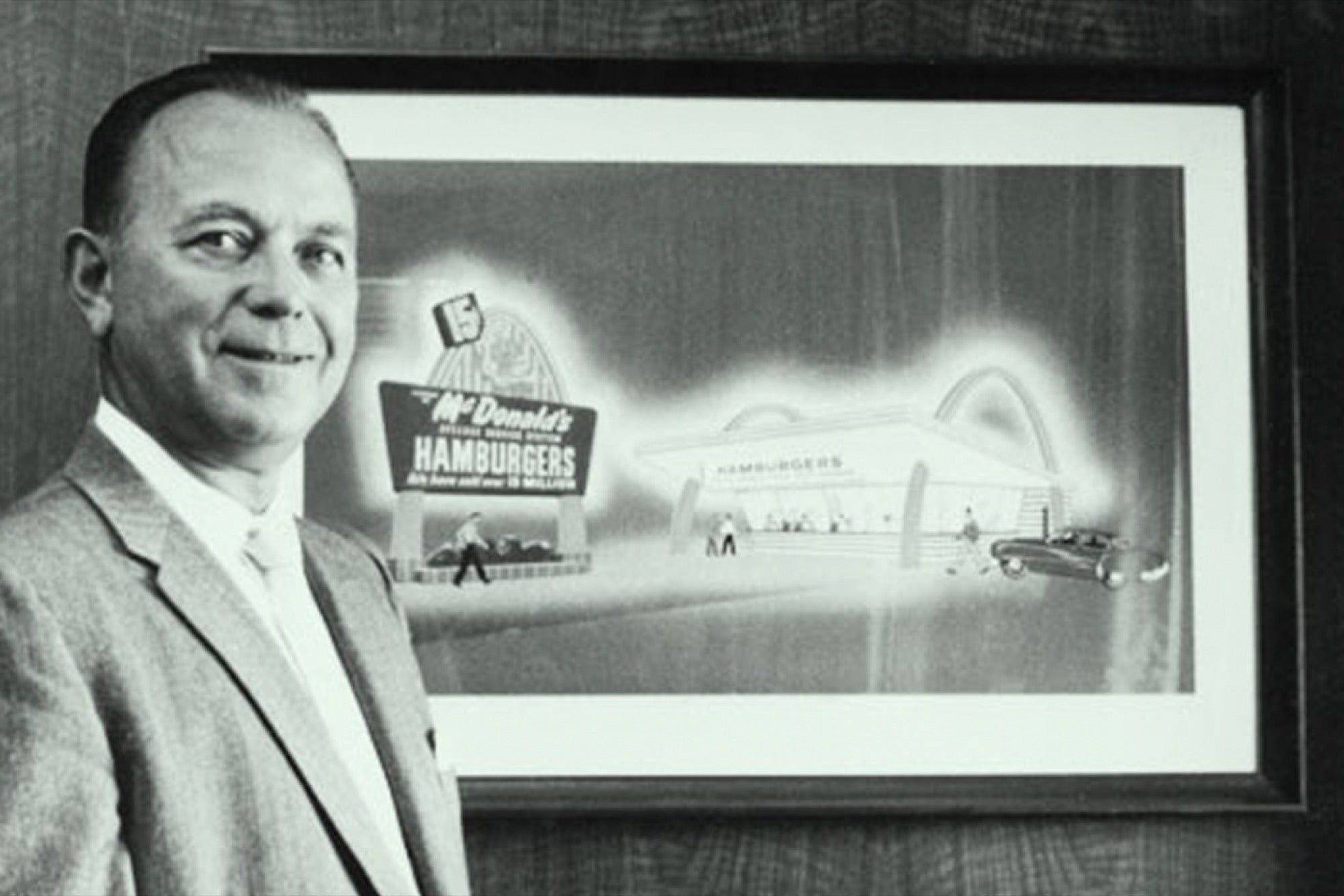
"I'm not really interested in hamburgers."
Here's what most people get wrong about Ray Kroc.
He didn't care about hamburgers. He cared about systems.
The McDonald brothers had invented something replicable. Every burger came out the same. Every fry was cooked to the same specification. Every restaurant could run the same kitchen.
Other restaurant franchises at the time — like Howard Johnson's and Dairy Queen — let franchisees customize. Different menus in different locations. Different suppliers. Different quality.
Kroc saw the opposite opportunity: what if every McDonald's was identical?
Same menu. Same prices. Same kitchen layout. Same experience.
A customer could walk into a McDonald's in California or Illinois and know exactly what they'd get.
That was the innovation. Not the food. The consistency.

QSC: Quality, Service, Cleanliness.
In 1955, Kroc opened his first franchised McDonald's in Des Plaines, Illinois.
He stood in the parking lot before opening and picked up every piece of trash himself.
This wasn't a photo op. It was a preview of how he'd run the company.
Kroc codified the entire operation into three letters: QSC.
Quality: The food had to meet exact specifications. Burgers were 1.6 ounces. Fries were cooked at exactly 325°F. Buns were toasted to a specific golden color.
Service: Orders delivered in 60 seconds or less. Employees trained to say exact phrases. Smiles required.
Cleanliness: Floors mopped every hour. Parking lots cleaned daily. Trash cans never overflowing.
Kroc hired inspectors to visit franchises unannounced. Locations that failed QSC inspections lost their franchise.
He called this "the religion of McDonald's."
"If you've got time to lean, you've got time to clean," became a company mantra.
Every week I break down what makes ads & creative work.
CreativeOS is where you go to actually build them.
20,000+ templates. AI that learns your taste. A creative engine that gets smarter every time you use it.
It's the platform behind the newsletter.
Try CreativeOS → use code CREATIVEDISCIPLINE for 25% off your first month.
The most valuable "no" in franchise history.
The pressure to deviate was constant.
Franchisees wanted to add menu items. Hot dogs. Pizza. Fried chicken. "My customers are asking for it."
Kroc said no.
Suppliers wanted to cut costs. Different beef. Cheaper buns. Smaller portions. "Nobody will notice."
Kroc said no.
Regional managers wanted local variations. "It works better in the South." "The Midwest prefers—"
No.
Kroc understood something that most franchisors miss: consistency is the product.
A customer at McDonald's isn't just buying a hamburger. They're buying predictability. The guarantee that this experience will be exactly like the last one.
Every "yes" to a variation weakens that guarantee. Every franchisee exception creates confusion. Every regional adjustment fractures the brand.
The discipline to say no — over and over, for decades — is what made McDonald's worth more than any competitor.
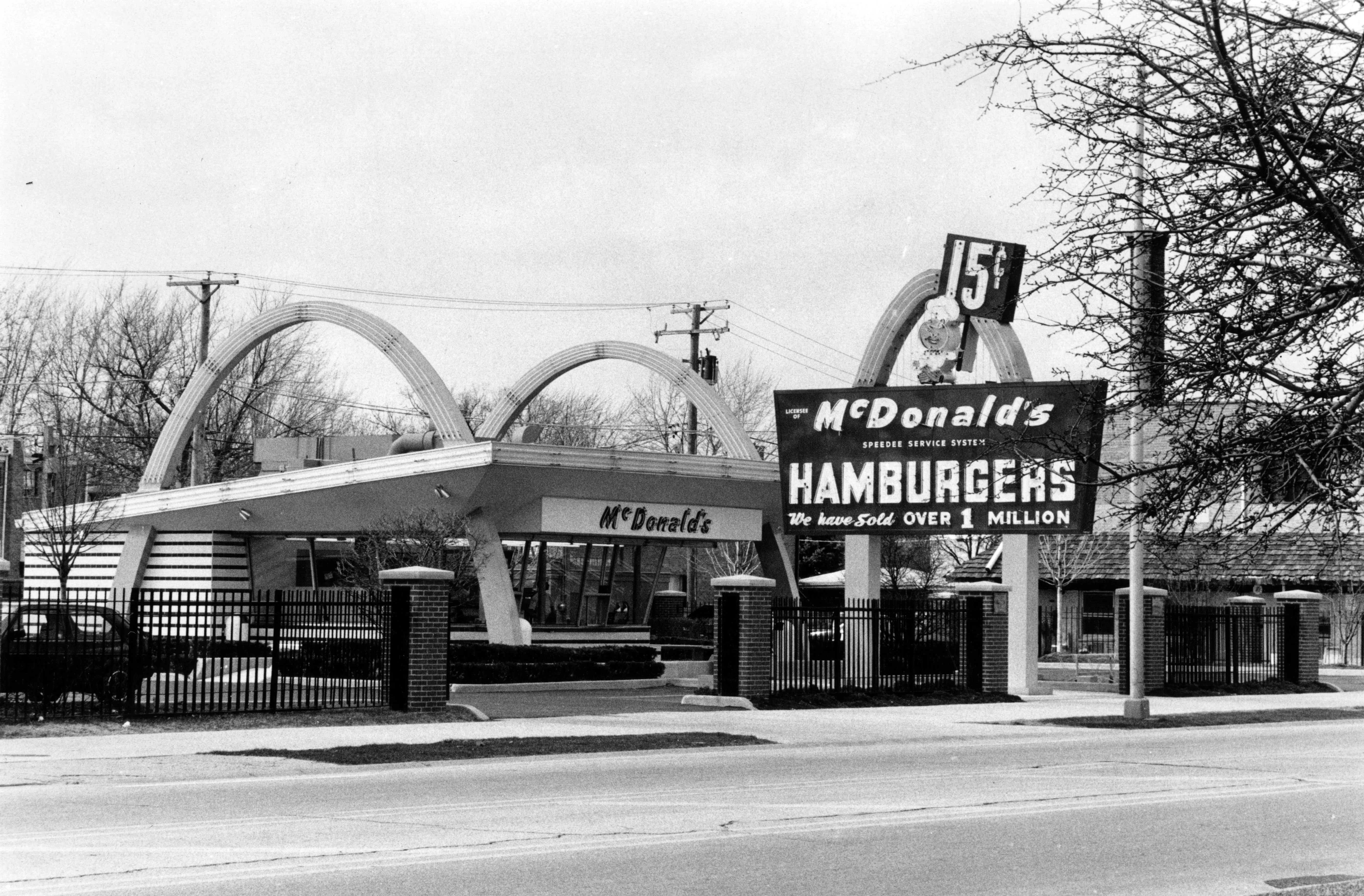
The arches became the message.
By the early 1960s, the golden arches were recognizable across America.
But McDonald's didn't get there through advertising. They got there through repetition.
Every restaurant looked identical. The arches were always in the same place. The colors were always the same. The signs were always the same height.
When you drove down a highway and saw those arches, you didn't need to read the sign. You knew what it was. And you knew exactly what you'd get inside.
The building was still the billboard. The system was still the product.
In 1968, McDonald's introduced the Big Mac. In 1971, the golden arches became the official logo, replacing the "Speedee" chef mascot.
But the fundamentals hadn't changed since 1948: limited menu, systemized kitchen, absolute consistency.
By 1975, McDonald's had over 3,000 locations. Revenue hit $1 billion.
Ray Kroc hadn't changed the McDonald brothers' formula. He had protected it.

McDonald's Creative Playbook
From a hamburger stand to the most valuable restaurant brand on earth — without changing the original product.
Here's what McDonald's teaches us about creative discipline:
Systems beat talent. The McDonald brothers designed a kitchen where anyone could work — not just experienced cooks. That's why it scaled. Creative systems that don't depend on genius are the ones that grow.
Consistency is the product. Customers don't buy hamburgers from McDonald's. They buy predictability. The same fry, every time, everywhere. That guarantee is worth more than any individual menu item.
The building is the brand. Before the logo, before the jingle, the golden arches were doing the work. Distinctive assets that communicate before words do.
Say no by default. Every franchisee wanted to customize. Every supplier wanted to cut costs. The empire was built on refusing every request that diluted consistency.
Speed is a feature. The brothers didn't make food faster by cooking faster. They made food faster by eliminating everything that slowed it down. Menu items, customization, carhops, plates — all gone. Subtraction is innovation.
The lesson for the rest of us
Ray Kroc was 59 years old when McDonald's hit its first $1 billion.
He didn't invent fast food — the McDonald brothers did that. He didn't improve the food — the recipe stayed the same.
What he did was protect a system and repeat it relentlessly.
Every decision was filtered through one question: does this maintain consistency, or break it?
That's creative discipline.
Not the discipline to keep innovating. The discipline to keep saying no.
"We take the hamburger business more seriously than anyone else," Kroc once said.
20 billion hamburgers later, that seriousness built an empire.
Keep Creating,
Chase
P.S. — Sign up for our events calendar so you can get access to all the experts we work with helping you build your creative intelligence in real time.