- Creative Discipline
- Posts
- 139: How Adidas Made the Podium the Only Ad That Mattered (Part 1)
139: How Adidas Made the Podium the Only Ad That Mattered (Part 1)
A Creative History on Adidas - Part One

Chase Mohseni
March 19, 2026

A cobbler, a Nazi Olympics, and the family feud that created two empires.
Hey everyone, Chase here from CreativeOS.
This week we're breaking down a brand that built an empire without traditional advertising.
No billboards. No magazine spreads. No clever copywriting.
Just one strategy, repeated for decades: put our shoes on the athletes who win.
Before Nike existed. Before endorsement deals were standard. Before "athlete marketing" was a category — a German cobbler named Adi Dassler figured out that the podium was the only advertisement he'd ever need.
This is Part 1 — from a mother's laundry room to the most controversial Olympics in history.
In this issue, you'll learn:
How a WWI soldier started making shoes in his mother's washroom with scraps from a trash heap
The Berlin Olympics moment that proved Dassler's strategy before it had a name
Why the Dassler brothers' hatred for each other created two of the biggest sportswear companies on earth
The laundry room.
In 1920, a 20-year-old German named Adolf "Adi" Dassler returned from World War I to his family home in Herzogenaurach, a small Bavarian town.
He wanted to make athletic shoes.
There was no factory. No funding. No business plan.
Just his mother's laundry room, a pile of scrap leather, and a dream.
Adi scavenged materials from wherever he could — army surplus, discarded equipment, even a trash heap where he found canvas and rubber from old military gear.
He pedaled a stationary bicycle to power his grinding wheel. He taught himself how to forge his own tools from old parts.
His first products weren't shoes. They were slippers — stitched together from scraps and sold door-to-door.
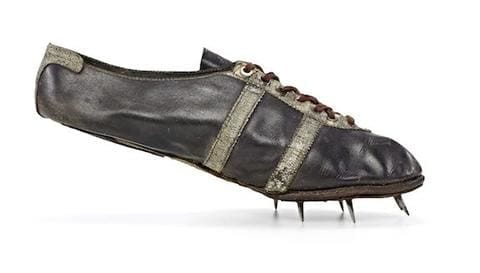
But every spare moment, he was working on something else: lightweight spiked shoes for track and field athletes.

The athlete obsession.
From the beginning, Adi had an idea that separated him from every other shoemaker.
He didn't wait for athletes to find him. He went to them.
He showed up at local track meets with shoes in hand. He watched runners train, studied their movements, and asked questions:
Where do your feet hurt? What slows you down? What do you wish your shoes could do?
Then he went back to the workshop and built shoes specifically for what he'd learned.
By the late 1920s, German athletes were starting to notice. The Dassler shoes were lighter. The spikes were better positioned. The fit was customized.
Adi wasn't selling shoes. He was solving problems for athletes — and letting the results speak for themselves.
His brother Rudolf joined the business to handle sales. Adi made the product. Rudolf got it to market.
By 1936, they were ready for the biggest stage in the world.
Berlin, 1936.
The 1936 Berlin Olympics were Adolf Hitler's showcase. A propaganda machine designed to prove Aryan superiority to the world.
Adi Dassler saw something different: a stage.
He packed his car with hand-made track shoes and drove to the Olympic Village. He didn't have an official sponsorship. He wasn't credentialed. He just showed up.
And he found Jesse Owens.
Owens was the American track star — a Black athlete competing in Nazi Germany. Hitler had planned for the Games to demonstrate white supremacy. Owens was about to humiliate that plan.
Adi convinced Owens to wear his shoes.
Owens won four gold medals — the 100m, 200m, long jump, and 4x100m relay. Every single one in Dassler shoes.
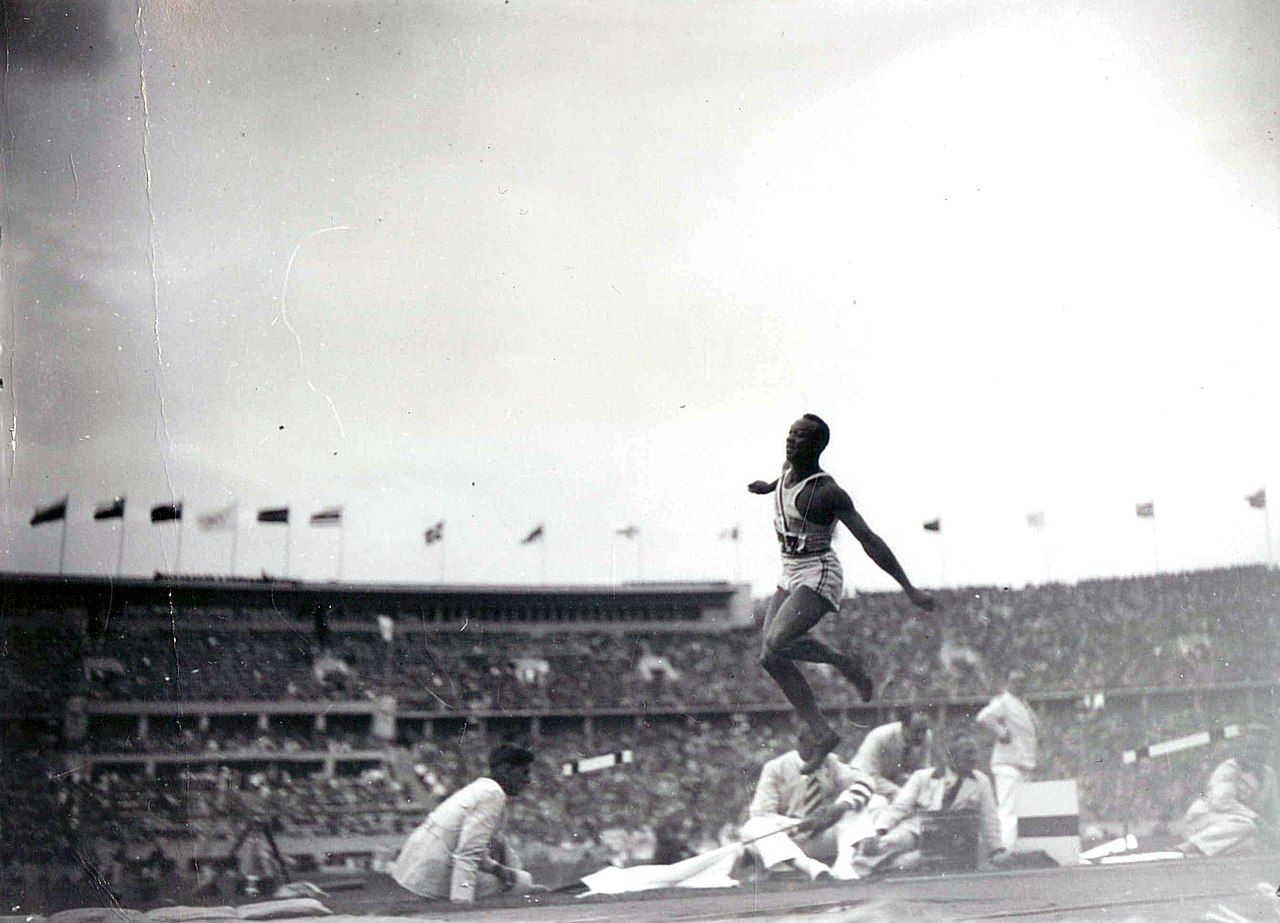
The Nazis were furious. The world was watching. And Adi Dassler learned something that would define his company for the next fifty years:
The podium is the advertisement.
He didn't need to buy media. He didn't need to write copy. He just needed to put his shoes on the winner.
Every photograph of Owens on the medal stand was a Dassler ad — without Dassler paying a single pfennig for placement.
Every week I break down what makes ads & creative work.
CreativeOS is where you go to actually build them.
20,000+ templates. AI that learns your taste. A creative engine that gets smarter every time you use it.
It's the platform behind the newsletter.
Try CreativeOS free → — use code CREATIVEDISCIPLINE for 25% off your first month.
War and the split.
World War II interrupted everything.
The Dassler factory was converted to produce anti-tank weapons. Both brothers were drafted. The business froze.
But something else was happening between Adi and Rudolf: they were learning to hate each other.
The exact cause is disputed. Some say it was Rudolf's wife and Adi's wife who couldn't stand each other. Some say Rudolf felt sidelined. Some say there was a comment during an Allied bombing raid that neither brother could forgive.
Whatever the reason, by 1948, the relationship was beyond repair.
The brothers split the company.
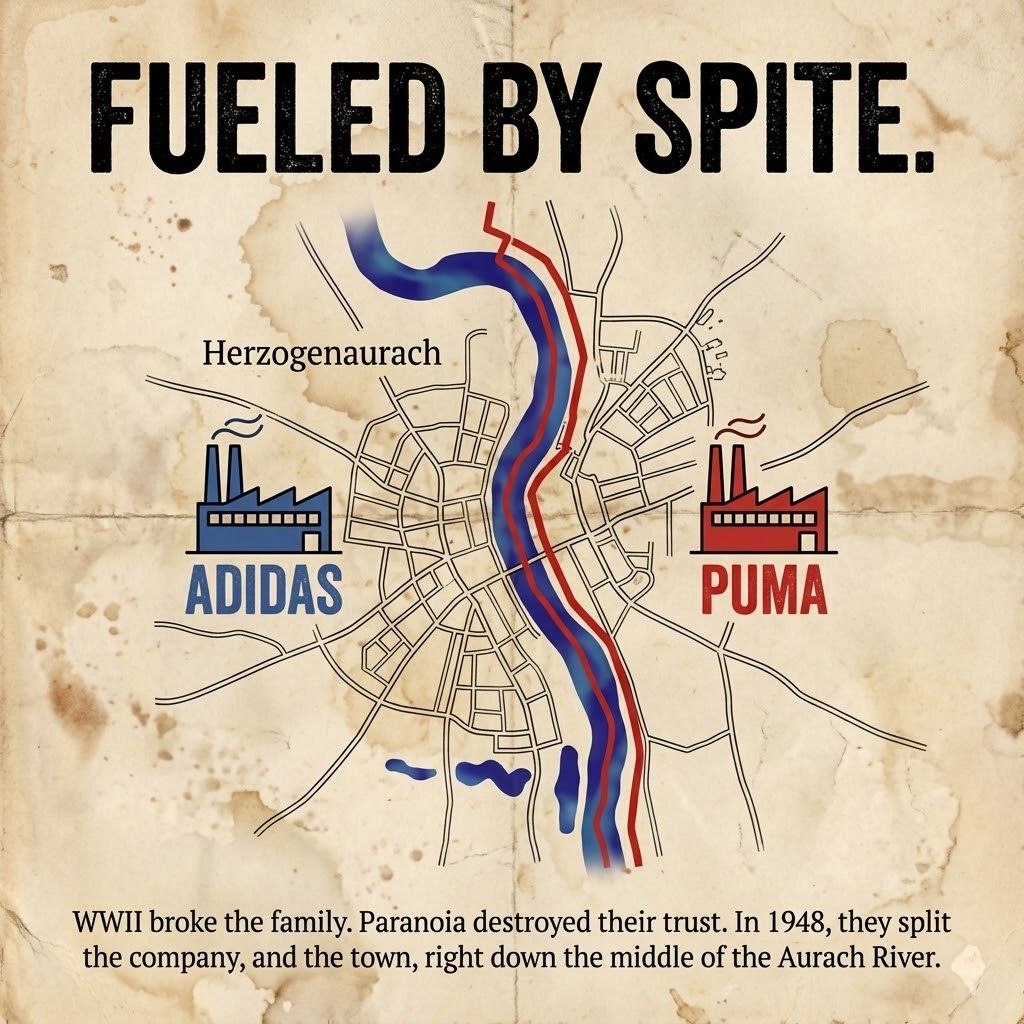
Rudolf crossed the river that ran through Herzogenaurach and started his own shoe company. He called it Puma.
Adi stayed and renamed his company. He took the first three letters of his nickname and the first three letters of his surname: Adi-Das.
Adidas was born.
A town divided.
What followed was one of the strangest corporate rivalries in history.
Herzogenaurach — a town of 20,000 people — split down the middle. You were either an Adidas family or a Puma family. You went to the Adidas bakery or the Puma bakery. Your kids went to the Adidas school or the Puma school.
Workers on opposite sides of the river didn't speak to each other. Marriages across company lines were forbidden. The town's soccer team had to alternate between Adidas and Puma gear.
The brothers never reconciled. They're buried in the same cemetery, at opposite ends, as far apart as possible.
But the split did something unexpected: it created competition.
Adi Dassler was no longer just making shoes. He was making shoes to beat his brother. Every Olympic medal, every world record, every winning team became a battle between Adidas and Puma.
The hatred made both companies better.

What this tells us about Creative Discipline
By 1949, Adidas existed as its own company.
Adi Dassler had already proven his thesis: shoes on winners sell themselves.
He had survived a World War, a family implosion, and starting over from scratch.
The takeaway so far: Adi Dassler never asked "how do we advertise?" He asked "how do we get our shoes on the winners?" That question shaped every decision — from hand-delivering shoes to training grounds to customizing fits for individual athletes. The product on the athlete was the marketing.
But he hadn't yet figured out how to make Adidas recognizable at a glance.
That would require three stripes — and a stadium full of athletes who all wore the same mark.
Next week: how the three stripes became the most recognized symbol in sports, and how the 1972 Munich Olympics turned Adidas into a global empire.
Keep Creating,
Chase
P.S. — Sign up for our events calendar so you can get access to all the experts we work with helping you build your creative intelligence in real time.