- Creative Discipline
- Posts
- 151: When you burn your best argument
151: When you burn your best argument
The air fryer ad that got the aesthetic right and the strategy backwards.

Chase Mohseni
April 29, 2026

The air fryer ad that got the aesthetic right and the strategy backwards.
Hey everyone, Chase from CreativeOS here. Let’s dig into this ad creative from Our Place together.
Our Place makes the most beautiful cookware on the internet.
Their ads look like editorial spreads. Their color palette is something a creative director would actually be proud of. The product photography is exceptional.
And this ad buries the one thing that would actually make someone switch air fryers in a subhead that most people won't read.
Here's what's happening — and what should have led.
What you'll learn:
Why urgency only works when the desire already exists
How "non-toxic" is the real headline Our Place is sitting on
What happens when you let aesthetics lead instead of argument

Grab your favorite color" sells to people who already want this. It doesn't create want.
The headline: "GRAB YOUR FAVORITE COLOR BEFORE IT SELLS OUT."
This is a retention play dressed as an acquisition play. It works great for people already in the consideration phase — warm audiences who've been to the website, who follow the brand, who've been going back and forth on the decision.
For cold traffic, it skips the most important step: giving someone a reason to care.
Scarcity is a closer, not an opener. It converts desire that already exists. It doesn't generate new desire. For a product most people already own in a cheaper version, you need to create the desire first.
"Non-toxic" is the headline. Everything else is decoration.
Look at what this ad is actually selling.
There are millions of air fryers on the market. Most cost $50-80. Our Place's starts at over $100 and goes up.
The reason someone pays a premium for a new air fryer when they already own one: they learn their current one is coated in Teflon, which releases chemicals when overheated. It's a health concern that's been spreading through the wellness and food community for years.
"Non-toxic 6-in-1 air fryer" is buried as a subhead under the color urgency play.
That is the entire brief. Not color. Not scarcity. I found out my air fryer is toxic and now I need to replace it.
The headline that writes itself: "Your air fryer is probably coated in chemicals. Ours isn't."
That's the curiosity gap. That's the reframe. That's the reason to pay $150 for a product you already own.
The aesthetic is doing work — just not the right work.
The color swatches, the editorial photography, the beautiful blues and terra cottas — all of this signals that this is a design object, not just an appliance.
That's smart for brand building. It's the right visual language for Our Place's audience.
But aesthetics earn aspiration, not urgency. And this ad is trying to do both at once without completing either.
The product photography at the bottom — fries crisping, the terracotta colorway detail, the oven in use — is doing the right job. Real use cases. Real results. That section is stronger than the headline it sits under.
The ad that worked, working harder.
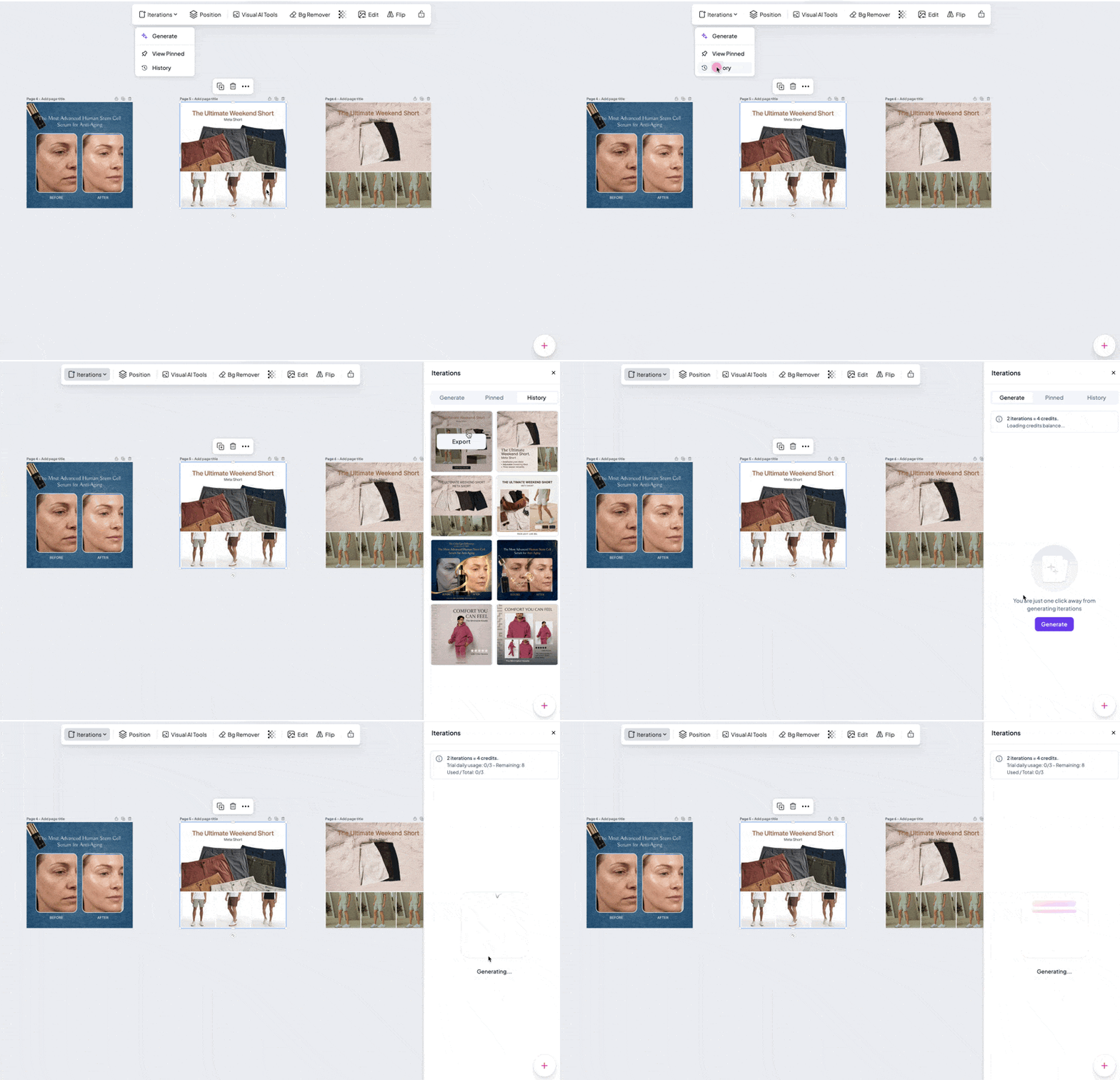
Not because you need more ads — because the one that worked deserves a second life.
Faster. Sharper. Built around how winners actually compound — in loops, not launches.
Feed it your best-performing ad. Get the next generation. Same DNA, new angles, ready to test.
Iteration Engine. Image-to-image. Built-in brand memory. The ad that worked, working harder.
CreativeOS is where winners become systems.
3 Ways This Ad Could Be Even Stronger
1. Lead with the reframe, not the color. "Your air fryer is probably coated in chemicals. Ours isn't." or "The first air fryer you don't have to Google the safety of." These lead with the problem — the Teflon concern — which creates desire from scratch on cold traffic. Color becomes the reward for staying through the argument, not the argument itself.
2. The scarcity play needs a reason to be real. "Before it sells out" lands as a generic urgency tactic when it's not tied to something specific. "The [color] colorway is almost gone — we're not restocking it until fall" is specific scarcity that feels real. Vague scarcity gets ignored. Specific scarcity converts.
3. Add one testimonial to the bottom grid. The lifestyle photography grid is good but it's all brand-generated. One customer photo or review snippet — "switched from my old Cuisinart and can't believe I waited this long" — would add social proof to a section that's currently all brand voice. The bottom of this ad is the end moment (Peak-End Rule). Make it do more work.
What This Teaches Us About Creative Discipline
Our Place knows their product is beautiful. So every creative instinct tells them to show the beauty.
But beauty is the differentiator on the shelf, not in the feed.
In a feed where someone isn't looking for an air fryer, beauty creates aspiration at best. The thing that stops a scroll and creates a genuine "I need to reconsider my current appliance" moment is information — specifically, the kind of information that reframes something the person thought was fine.
"Non-toxic" is that information. It's sitting in this ad. It just needs to be first.
How to Apply This Week
Find your "non-toxic" line. What does your product solve that your customer doesn't yet know is a problem? That's your cold traffic headline. The aesthetic is for after they care, not before.
Audit every scarcity CTA in your account. Is it specific or generic? "Limited stock" is noise. "Only 47 units left in [specific variant]" is real. Specificity is what separates urgency that converts from urgency that gets ignored.
Identify your real competitor. Our Place isn't competing with other premium air fryers — they're competing with the $60 unit someone already owns and doesn't think about. Know what you're actually asking someone to replace and write your creative to justify that switch.
Keep Creating,
Chase
P.S. - Sign up for our events calendar so you can get access to all the experts we work with helping you build your creative intelligence in real time.
P.P.S. — A few friends have been working with Automatic, an AI integration agency, on custom automations and internal systems. What they've built is genuinely impressive. Worth a look if you're trying to turn AI into real operational leverage instead of another tab open in your browser.