- Creative Discipline
- Posts
- The $1 Billion Subscription Machine (Dollar Shave Club, Part 2)
The $1 Billion Subscription Machine (Dollar Shave Club, Part 2)
A Creative History on Dollar Shave Club - Part Two

Chase Mohseni
April 09, 2026

After the video that broke the internet — how Dollar Shave Club built a business that Gillette couldn't copy fast enough.
Hey everyone, Chase here from CreativeOS.
Last week we covered the $4,500 video that crashed Dollar Shave Club's website and kicked off one of the most studied brand moments in DTC history.
Today we're covering what happened after.
Because the video wasn't the business. It was the door. What Dubin built behind that door is why Unilever paid $1 billion in 2016 to own it.
In this issue, you'll learn:
Why Dollar Shave Club's real advantage had nothing to do with razors
How they built a content engine that kept subscribers engaged long enough to matter
What the Unilever acquisition actually says about what was worth $1 billion
The subscription insight.
Most people think Dollar Shave Club succeeded because it was cheap.
It wasn't. A four-blade razor from DSC cost roughly the same as a comparable Gillette refill.
The actual advantage was convenience paired with entertainment.
Dubin understood something most razor companies didn't: men don't think about razors. They don't enjoy buying razors. They don't want to stand in a CVS aisle comparing blade counts and debating which one is worth the price.
Dollar Shave Club removed that decision entirely. You sign up once. Razors show up every month. You never think about it again.
That's the Job To Be Done. Not cheap razors. Never having to think about razors again.
The subscription model was the product. The razor was just what showed up in the box.
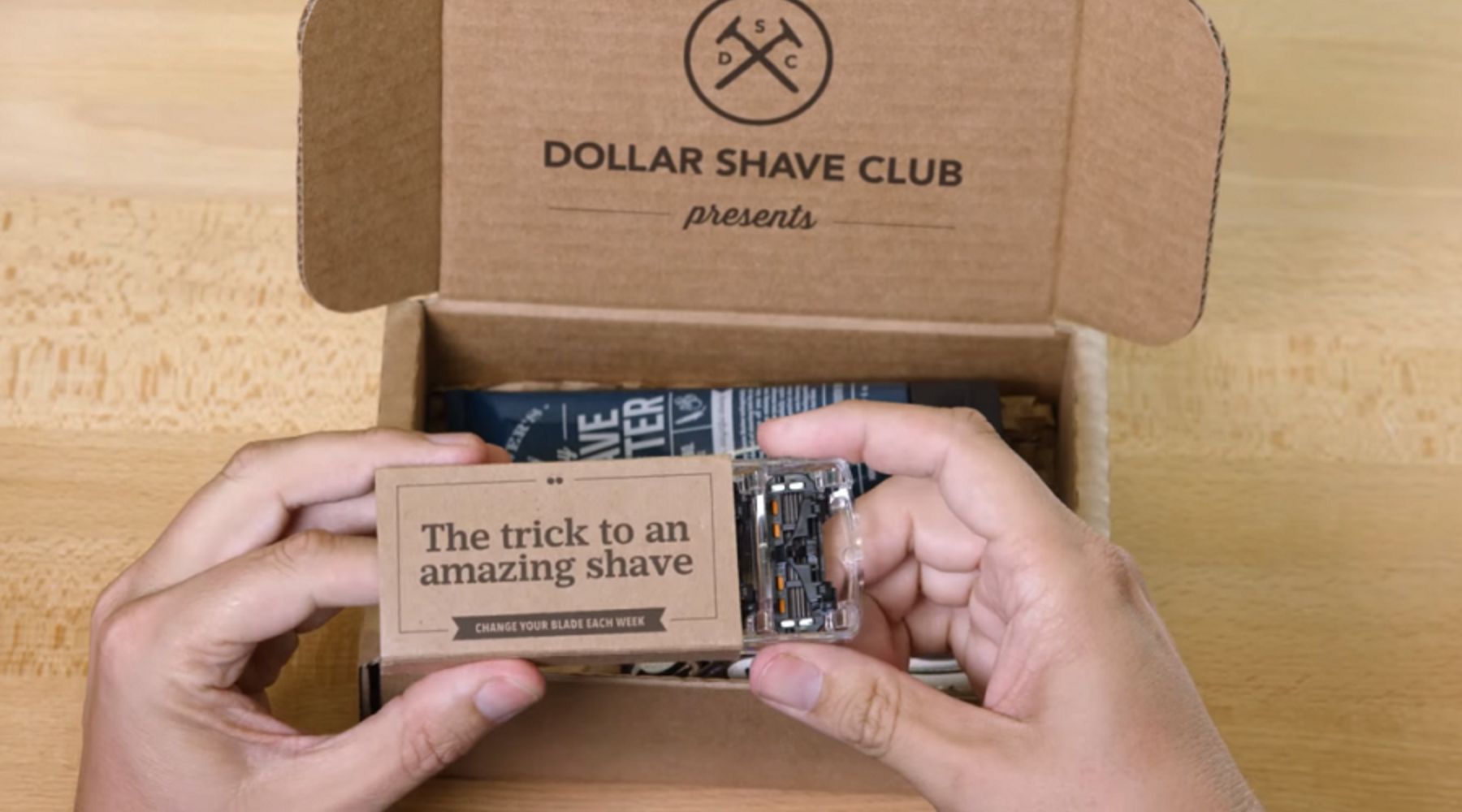
The Bathroom Minutes.
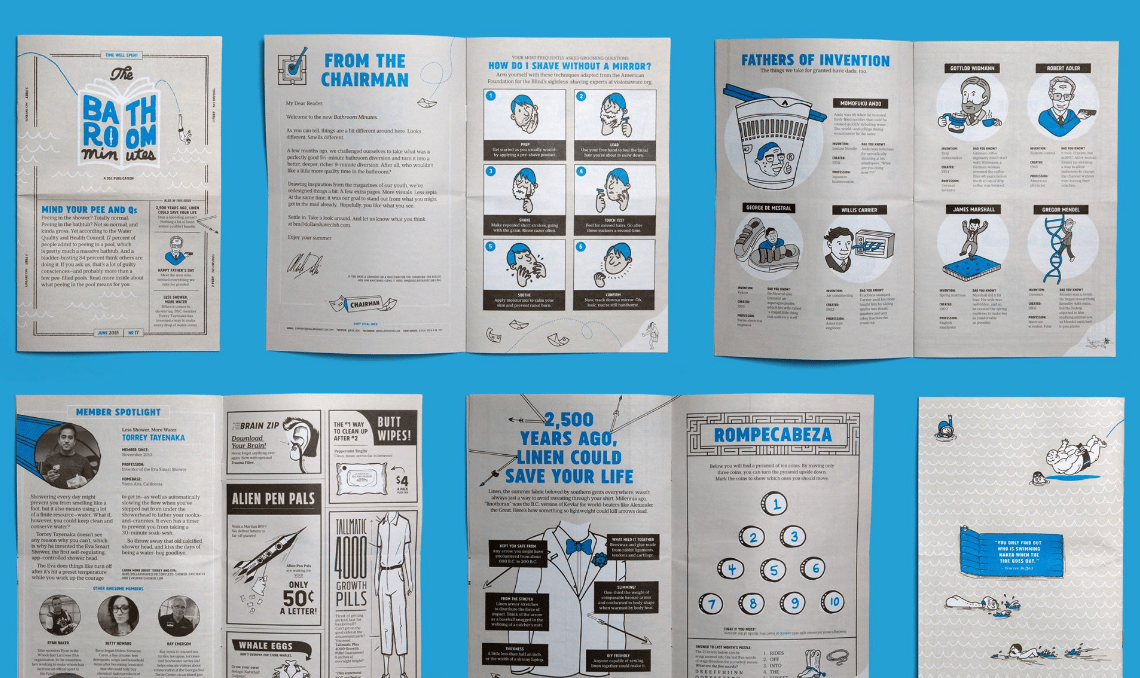
In 2014, Dollar Shave Club launched a free print magazine called Bathroom Minutes.
It was designed to be read in exactly one place.
The magazine covered exactly the kind of content a man in his 30s might read while sitting somewhere private — short essays, jokes, health tips, pop culture. It had no ads. It wasn't trying to sell anything.
Dubin called it "content that people actually want."
This sounds obvious in retrospect. It wasn't obvious then.
At a time when branded content meant blog posts with product links, Dollar Shave Club was printing a physical magazine and mailing it to their subscribers for free. The magazine had no direct conversion mechanism. It didn't push upgrades or cross-sells.
It just made people happy they were subscribers.
That happiness showed up in one number: churn. Dollar Shave Club's monthly churn rate was around 5% — significantly lower than the category average. Men who had no strong feeling about their razor company before subscribing developed genuine brand loyalty because of a magazine they read while brushing their teeth.
The lesson: retention isn't about the product. It's about the relationship you build around the product.
Building the content engine.
After Bathroom Minutes, Dubin expanded the content operation.
One Wipe Charlies — a line of flushable wipes — was launched not through an ad, but through a video. The video cost more than the original DSC ad. It was just as funny. It generated another wave of press coverage and a new product line.
Dollar Shave Club had figured something out: their marketing was the product experience. The videos, the magazine, the email newsletter, the irreverent packaging copy — all of it was part of what subscribers were paying for.
By 2015, DSC had 3.2 million subscribers. Gillette had watched all of this happen and spent two years trying to catch up with their own direct-to-consumer subscription service. It never worked. Gillette's brand was built on retail dominance and professional authority. It couldn't suddenly be funny and casual. The persona was locked.
Dollar Shave Club had a different persona problem: they needed to expand beyond razors without losing the brand voice that made people loyal.
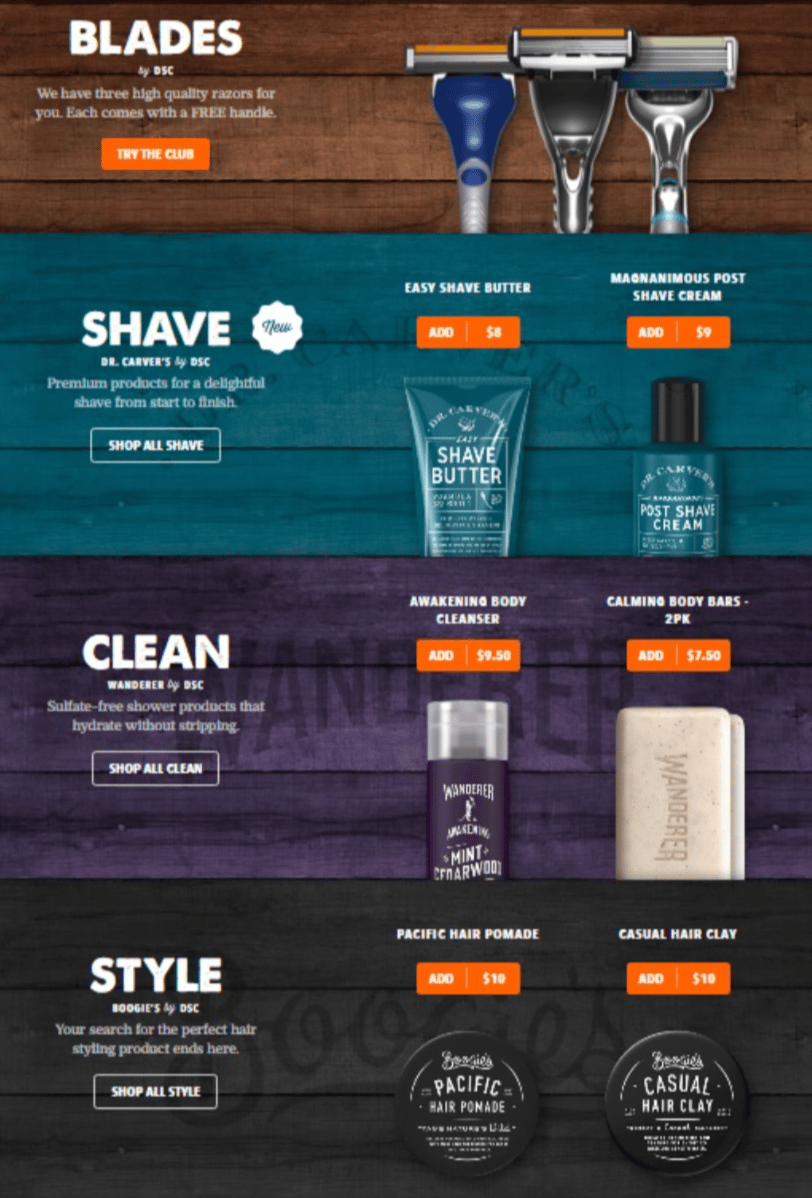
Dubin launched Dr. Carver's Easy Shave Butter, Post Shave Dew, and a full men's grooming line. Each extension came with its own content — its own way of explaining why a man should care about something he'd never thought about before.
The formula was always the same: entertainment first, product second. The joke opens the door. The product is what you find inside.
Every week I break down what makes ads & creative work.
CreativeOS is where you go to actually build them.
20,000+ templates. AI that learns your taste. A creative engine that gets smarter every time you use it.
It's the platform behind the newsletter.
Try CreativeOS free → — use code CREATIVEDISCIPLINE for 25% off your first month.
New produc
What Unilever actually bought.
In July 2016, Unilever acquired Dollar Shave Club for $1 billion in cash.
Analysts immediately pointed to the subscriber base — 3.2 million paying customers. But subscriber bases can churn. What Unilever was actually paying for was something harder to replicate.
They were buying a content playbook that Gillette couldn't copy.
They were buying a direct-to-consumer infrastructure that bypassed retail entirely — no shelf space negotiations, no margin sharing, no dependence on Walmart's buying decisions.
They were buying a brand that had genuine cultural affinity with a demographic that traditionally didn't care about brand loyalty.
And they were buying the proof of concept: that a brand could be built entirely on creative discipline. That funny, honest, consistent content could create a $1 billion consumer goods company from a warehouse full of Korean razor cartridges and a guy who studied improv.
Gillette had spent $200 million on athlete sponsorships. Dollar Shave Club spent $4,500 on one video and built a better relationship.
The Dollar Shave Club Creative Playbook
The job is never the product. Men didn't subscribe to Dollar Shave Club for razors. They subscribed to never think about razors again. Know the real job before you brief the creative.
Entertainment earns attention; the product has to keep it. The video got them in the door. The product, the magazine, and the packaging copy kept them subscribed. Both halves have to work.
Brand voice is a competitive moat. Gillette couldn't be funny because Gillette had spent decades being authoritative. Dollar Shave Club's irreverence wasn't a tactic — it was a structural advantage their biggest competitor couldn't replicate.
Content is retention strategy. Every piece of content Dollar Shave Club published was ultimately about reducing churn. The Bathroom Minutes didn't have a conversion mechanism — it built emotional loyalty that showed up when subscribers had a reason to cancel.
Persona coherence beats budget. The video that started everything cost less than most brands spend on a single photo shoot. It worked because the voice was consistent, confident, and specific. That's a creative discipline problem, not a budget problem.
Keep Creating,
Chase
P.S. — Sign up for our events calendar so you can get access to all the experts we work with helping you build your creative intelligence in real time.